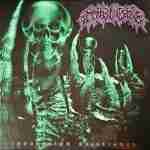
Yezda Urfa Boris stands as one of progressive rock’s most fascinating anomalies—a self-produced 1975 demo that evolved into a cult masterpiece decades later. Initially ignored by the music industry, the album has since been rediscovered and celebrated for its breakneck tempos, complex time signatures, and diverse instrumentation.
Although Yezda Urfa never reached mainstream recognition during their active years (1973–1981), their sound now occupies a unique place in the prog rock canon. Critics and fans alike describe Boris as both an underrated classic and an absolute masterpiece, elevating a rough demo into a legendary work of art.
Formed in Chicago in the fall of 1973, Yezda Urfa brought together five musicians with deep personal and musical connections:
The group originated from a high school collaboration between Miller, Kimbrough, and Christoff, who reunited after graduation to form the foundation of the band. Their bond allowed them to tackle extraordinarily complex arrangements with seamless synchronicity. Sadly, both Rodenbaugh and Christoff passed away “way too young,” a reminder of how brief yet brilliant this artistic partnership was.
The band’s peculiar name—Yezda Urfa—was the product of serendipity. Leafing through a dictionary, the members stumbled on the names Yazd (Iran) and Urfa (Turkey). With “Yazd” altered to “Yezda” for easier pronunciation, the combination became their identity. The randomness of this choice mirrored the band’s quirky yet intellectual sensibility: complex music paired with whimsical, sometimes absurd titles and lyrics.
Though a quintet, Yezda Urfa produced the sound of an orchestra. Their use of instruments such as cello, marimba, harpsichord, mandolin, and Mellotron expanded their sonic palette beyond the standard rock lineup. The result was a dense, kaleidoscopic sound that could shift from folk textures to symphonic grandeur to frantic jazz-like passages.
This versatility enabled the band to craft what one critic described as “a unique tapestry of tones, timbres, and zigzagging manic motifs.”
At its core, Yezda Urfa’s style blended the symphonic power of Yes with the contrapuntal intricacy of Gentle Giant. Rick Rodenbaugh’s vocals bore similarities to Jon Anderson’s high register, while the band adopted and then exaggerated Gentle Giant’s polyphonic vocal runs.
As one review noted, Yezda Urfa “shamelessly borrowed the great GG’s mastery of polyphonic vocal runs—only they employed them much faster and upped the weirdness factor manyfold.”
The band’s music has since been recognized as an early form of brutal prog—a subgenre defined by extreme tempos, relentless time changes, and over-the-top eclecticism. Their “frantic time signature barrages” set them apart as pioneers of a style too complex for commercial success but deeply rewarding for prog devotees.
Unfortunately, this extremism came at the wrong time. Arriving after prog’s initial boom (1969–74) and before its 1990s revival, Yezda Urfa’s demanding sound alienated record labels just as punk and glam were reshaping the industry. Their timing doomed them commercially, but it preserved their reputation as uncompromising innovators.
Recorded in 1975, Boris was privately pressed by the band in an attempt to secure a record deal. Released with no catalog number and under “Not On Label,” the demo quickly became one of the rarest American prog rock records. Its raw sound, far from being a weakness, became its defining strength.
The story of Boris did not end with its obscurity. In 1985, fan Peter Stoller brought the demo to Greg Walker of Syn-Phonic Records. Impressed, Walker would later release the band’s second album Sacred Baboon in 1989. Boris itself finally saw official reissues beginning in 2004, with additional CD and vinyl runs through 2014, including a limited Anazitisi Records edition with a bonus single.
This delayed recognition cemented Boris as a cult treasure for collectors and prog fans alike.
The original Boris LP ran 42:44 across five tracks:
Bonus track (added on reissues):
Despite its basement-level production, the album was praised for its “live feel” and minimal overdubs—qualities that gave it immediacy and charm.
Sacred Baboon (recorded 1976, released 1989) reworked several Boris tracks with cleaner studio production. While polished, many fans prefer the raw vitality of Boris.
Critics noted that the later album at times sounded “unbearably like Gentle Giant” and lacked the originality of the demo. Conversely, the rough edges of Boris preserved spontaneity and an authenticity that Sacred Baboon could not replicate.
The contrast between the two albums illustrates Yezda Urfa’s rapid artistic growth. The debate—raw demo versus refined studio record—remains central to the band’s legacy. For many fans, Boris captures lightning in a bottle, while Sacred Baboon shows what might have been if the band had secured a major label deal.
Yezda Urfa’s story reflects the paradox of progressive rock: breathtaking creativity met by commercial indifference. Boris‘s self-made demo was too extreme for its time, yet decades later, it is celebrated as an enduring classic.
Rediscovered by niche labels and cherished by collectors, the album proves that innovation sometimes waits years for recognition. Today, Yezda Urfa Boris stands as both a testament to artistic vision and a reminder of the thin line between obscurity and immortality.
1. Who were the members of Yezda Urfa?
Rick Rodenbaugh, Phil Kimbrough, Mark Tippins, Marc Miller, and Brad Christoff.
2. Why is Boris considered a masterpiece?
Its raw energy, complex compositions, and rare status turned a simple demo into a legendary prog rock artifact.
3. What is “brutal prog,” and how does Yezda Urfa fit in?
Brutal prog is a hyper-complex, high-energy form of prog rock. Yezda Urfa is considered one of its earliest examples.
4. How rare is the original Boris LP?
Extremely rare—self-released in 1975 with no catalog number, it’s one of the rarest U.S. prog pressings.
5. What’s the difference between Boris and Sacred Baboon?
Boris is raw and immediate, while Sacred Baboon is polished and studio-refined. Fans remain divided on which is better.